Decision
Website Design for Insurance Brokerage Firms
Plact Research
7 min read · Updated Jul 4, 2026 · Benchmarked from real competitor analysis
Key Takeaway
To support the buyer decision, a brokerage site must feature a fast loading hero section, strict regulatory disclosures, and region specific communication channels like WhatsApp or RFQ forms.
This article explains how insurance brokerage websites are structured to influence the final decision of commercial buyers and high-net-worth individuals. You will learn about hero section requirements, line of business taxonomy, and regional compliance standards.
See how your site scores against this benchmark
Free audit →Convince Commercial
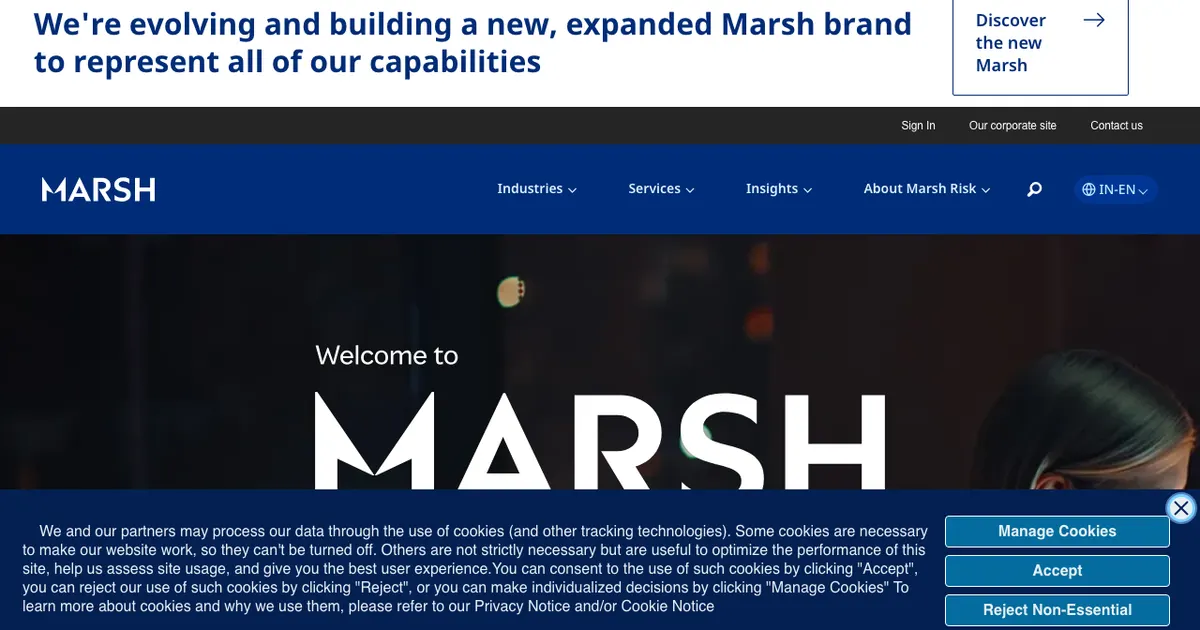
A brokerage website has one primary goal: to convince a commercial buyer or high-net-worth individual to request a quote. The hero section must communicate exactly what you sell, where you are licensed, and how to start a conversation.
For US brokerages, the hero must immediately establish state-level authority. For Indian brokerages, the hero must cater to a mobile-first audience that prefers direct communication. A generic stock image of an umbrella or a handshake will not convert a logistics company looking for a marine cargo policy or a hospital group seeking medical malpractice coverage.
The hero section needs a clear value proposition, a primary call to action for commercial quotes, and a secondary call to action for personal lines. It must load in under two seconds on a 4G connection in Mumbai or a 5G connection in Chicago.
What the site needs
The taxonomy of an insurance brokerage site is not the same as a standard corporate site. You cannot rely on a simple "Services" dropdown. The architecture must mirror how buyers search for coverage and how regulators expect you to disclose information.
Page Taxonomy for Brokerages
Your site needs distinct parent and child pages structured by line of business:
- Commercial Lines
- General Liability
- Workers Compensation
- Commercial Auto and Fleet
- Cyber Liability
- Professional Indemnity (Errors and Omissions)
- Directors and Officers (D&O)
- Marine and Cargo
- Personal Lines
- High-Net-Worth Home and Auto
- Term Life and Whole Life
- Health and Super Top-Up (India)
- Employee Benefits
- Group Health Insurance
- Group Term Life
- Corporate Travel (India)
- Section 125 Cafeteria Plans (US)
- Carrier Partners
- A dedicated page listing your carrier appointments.
- Claims Assistance
- Step-by-step guides for filing claims with your office.
- Licensing and Legal
- A comprehensive page hosting your regulatory disclosures.
Regulatory Compliance
Compliance is non-negotiable. US brokerages must display their state Department of Insurance (DOI) license numbers, NAIC company codes, and GLBA privacy notices. The footer of your site must link to a privacy policy that outlines how you handle non-public personal information (NPI).
Indian brokerages must display their IRDAI direct broker or composite broker registration number, the validity period, and a link to the IRDAI code of conduct. The footer must also contain the standard disclaimer regarding the availability of insurance products.
Regional Communication Norms
Communication channels differ by region. In India, WhatsApp integration is a standard B2B norm. Data shows 60 to 100 percent of Indian brokerage traffic prefers to initiate contact via WhatsApp rather than a standard contact form. Your site must feature a floating WhatsApp widget on every page, routing inquiries directly to the appropriate commercial or personal lines desk.
In the US, RFQ (Request for Quote) forms vary by line of business but remain the primary conversion mechanism for commercial lines. US buyers expect a detailed form that asks for company name, industry code, and employee count.
Components that convert
A brokerage site needs specific functional components to move a prospect from research to quote submission. B2B web norms dictate specific patterns for trust building and lead capture.
Carrier Carousels
B2B web norms show carousels are ubiquitous, appearing on 80 to 100 percent of successful brokerage sites. This is not a design gimmick. It is visual proof of your carrier appointments. A sliding carousel of carrier logos immediately establishes authority.
The carousel must be accessible. It should pause on hover and display static logos on mobile devices rather than auto-rotating, which causes friction on touch screens. You must secure permission from your carriers before displaying their logos, as some providers have strict brand guidelines for digital representation.
WhatsApp Floating Widgets
For Indian brokerages, a WhatsApp widget is mandatory. It allows office managers and business owners to send policy documents, ask quick questions, and request renewals without navigating a complex contact form. The widget should pre-fill a message based on the page the user is currently viewing. If they click the widget on the Marine Cargo page, the WhatsApp message should automatically read: "I have a question about Marine Cargo insurance."
Multi-Step RFQ Modules
For commercial lines, a simple contact form is insufficient. You need a multi-step RFQ form that captures specific underwriting data. This filters out unqualified leads before they reach your producers.
A strong commercial RFQ module asks for:
- Business type and industry
- Annual revenue or payroll
- Employee count
- Prior loss history
- Current coverage limits
This form should use conditional logic. If a user selects "Transportation" as their industry, the form should immediately ask for fleet size and radius of operation. RFQ forms should vary in length and complexity based on the specific insurance product.
Brokerage Template vs Plact Build Comparison
| Feature | Standard Template | Plact Brokerage Build |
|---|---|---|
| **Taxonomy** | Generic Services page | Line-of-business specific child pages |
| **Compliance** | Basic footer text | Dedicated IRDAI/DOI disclosure pages |
| **India Comms** | Standard contact form | Page-specific WhatsApp routing |
| **US Lead Gen** | Generic "Contact Us" button | Conditional multi-step RFQ modules |
| **Trust Signals** | Static logo grid | Accessible, auto-rotating carrier carousel |
| **AEO Readiness** | Basic sitemap | llms.txt + FinancialService JSON-LD |
SEO+AEO (JSON-LD+llms.txt)
Search engine optimization for insurance brokerages is highly competitive. You are competing against carriers with massive domain authority and direct-to-consumer aggregators with aggressive pricing models. To win, you need precise local SEO and Answer Engine Optimization (AEO).
JSON-LD Implementation
Implement FinancialService or InsuranceAgency JSON-LD schema. This tells search engines exactly what you do, where you are located, and which carriers you represent. Your schema must include your area served, which is critical for local SEO.
Include your license numbers in the schema where applicable. Avoid relying on FAQPage schema. Current B2B norms show FAQPage schema is rare, appearing in less than 25 percent of vertical sites, and search engines frequently deprioritize it in favor of structured data that defines the business entity and its services.
Focus on LocalBusiness schema with precise area served definitions. If you have multiple branches, use specific branch pages with individual LocalBusiness schema blocks.
llms.txt for Answer Engines
Large Language Models (LLMs) now drive a significant portion of B2B search. Procurement officers and HR directors ask AI models for recommendations like "best group health insurance broker in Pune" or "workers comp broker in Dallas."
An llms.txt file in your root directory provides a structured, markdown-formatted summary of your brokerage. This ensures the AI has accurate, structured data about your firm, your carrier appointments, and your licensing status.
Your llms.txt file should include:
- Brokerage name and IRDAI or DOI registration numbers
- Primary lines of business written
- Geographic service areas
- Key carrier relationships
- Direct links to your RFQ forms
This file acts as a direct briefing document for AI search engines, bypassing the need for them to guess your service offerings based on raw HTML parsing.
Mistakes
Brokerages make predictable mistakes online that cost them commercial premiums.
The most common mistake is hiding the team. Insurance is bought from people, not from websites. Sites that only show generic stock photos of families or office buildings fail to build trust. You need a dedicated team page with professional headshots, license numbers, and specific bios of your producers and account managers. Highlight their designations, such as ARM, CPCU, or Associate in Insurance Services.
The second mistake is ignoring mobile RFQ flows. Commercial business owners often research insurance on their phones after hours. If your RFQ form is a 50-field desktop-only layout, they will abandon the process. Break long forms into digestible, mobile-friendly steps with progress indicators.
The third mistake is failing to update carrier logos. If you lose an appointment or gain a new one, your website must reflect that immediately. Displaying a carrier you no longer represent is a compliance violation in both the US and India. The carrier carousel must be easily editable by your marketing team without requiring developer intervention.
The fourth mistake is omitting WhatsApp in the Indian market. Ignoring the 60 to 100 percent adoption rate of WhatsApp for business communication in India means losing leads to competitors who offer a one-click chat option. A standard phone number is no longer sufficient.
The fifth mistake is using vague calls to action. "Learn More" or "Get Information" do not convert. Use specific directives like "Request a Commercial Quote" or "Start a WhatsApp Chat."
FAQ
Do I need separate websites for my India and US operations? If you hold licenses in both countries, you should use separate domains or subdomains. The regulatory requirements for IRDAI in India and the DOI in the US are entirely distinct. Mixing them on a single site creates compliance risks and confuses search engines regarding your primary service area.
How often should I update my carrier carousel? Review your carrier appointments quarterly. Remove any carriers where you have lost an appointment and add new ones immediately. Ensure your marketing team has direct access to the CMS to make these changes without IT involvement.
Should I use a chatbot or WhatsApp for lead capture? In India, use WhatsApp. It is the expected communication channel. In the US, use an RFQ form for commercial lines. Chatbots are acceptable for basic FAQs, but commercial buyers prefer to submit structured data via a form rather than converse with a bot.
Can I display premium estimates on my website? In India, IRDAI guidelines strictly regulate the advertisement of insurance products, including premium comparisons. You must ensure any displayed rates are indicative and carry the necessary disclaimers. In the US, displaying generic premium ranges for commercial lines is risky, as rates are highly specific to the underwriting profile. Direct users to an RFQ form instead.
What is the ideal length for a commercial lines RFQ form? Keep it under seven fields. Ask for the essentials: business name, industry, contact info, revenue, and current coverage details. Your producers should gather the detailed underwriting data during the follow-up call.
***
About Plact
Plact (plact.work) is a B2B website builder focused on structured data, compliance, and conversion. We build digital infrastructure for insurance brokerages, financial services firms, and regulated industries. We do not use generic templates. We build sites based on your specific page taxonomy, regional communication norms, and carrier appointments.
Rebuild Plan and Fixed Price
Stop losing commercial premiums to brokers with better digital infrastructure.
Send your current website URL and your target cities (e.g., "www.yourbrokerage.com, Mumbai and Pune" or "www.yourbrokerage.com, Dallas and Houston"). We will review your current site, map your line-of-business taxonomy, and return a detailed rebuild plan with a fixed price.
Email your URL and cities to build@plact.work to get started.
Send us your current URL and the cities you target. We reply within one business day with a page-by-page rebuild plan and a fixed price. No sales call required.
Related guides