Decision
Website Design for Training & Coaching Companies
Plact Research
9 min read · Updated Jul 4, 2026 · Benchmarked from real competitor analysis
Key Takeaway
To drive a final decision, your site must separate corporate training from individual coaching and provide structured proposal forms for enterprise deals.
Learn how to design a training and coaching website that filters for intent and accelerates the buying decision. This guide covers hero structures, program taxonomies, and regional contact routing for L&D buyers.
See how your site scores against this benchmark
Free audit →Establish Authority and Filter for Intent
The hero section of a training website must immediately establish authority and filter for intent. A visitor should know within five seconds if you serve enterprise corporate teams, individual executives, or both.
Avoid abstract statements about "unlocking potential" or "transforming mindsets." These phrases are slop. They mean nothing to an HR manager with a $50,000 training budget. Instead, state exactly what you teach, who you teach it to, and the primary delivery method.
A high-converting hero structure for this vertical contains three elements:
- A specific headline identifying the audience and outcome.
- A subheadline clarifying the format (virtual, in-person, hybrid).
- A primary call to action for corporate buyers and a secondary option for individuals.
For example, a headline like "Sales Enablement Training for Mid-Market SaaS Teams" outperforms "Elevate Your Sales Pipeline." The former tells the buyer they are in the right place. The latter forces them to guess.
What the site needs
A training and coaching website requires a specific information architecture. Buyers need to evaluate the curriculum, the facilitator, and the return on investment before booking a consultation.
Distinct Program Taxonomies
You must separate corporate training from individual coaching. A Fortune 500 HR manager looking for a team-wide communication workshop has different needs than a startup founder seeking one-on-one executive coaching. Your site needs dedicated landing pages for each program type.
These pages must outline the duration, the delivery mode, the target audience, and the prerequisites. Do not bury this information in a PDF brochure. Put it directly in the HTML.
Geographic and Regional Nuances
If you operate in the US and India, your site must handle regional behaviors. According to B2B design norms, websites targeting Indian audiences see a 60 to 100 percent adoption rate of WhatsApp for initial inquiries. US audiences expect a standard contact form or a calendar booking integration. Your site must route visitors to the appropriate channel based on their location or selected program.
Request for Quote (RFQ) Paths
B2B norms show RFQ usage varies heavily by vertical, but in L&D, a structured "Request a Proposal" form is standard for enterprise deals. While individual coaching can rely on direct booking via Calendly, corporate training contracts require custom scoping.
Your RFQ form should capture team size, current skill gaps, and desired timeline. This qualifies the lead before they even submit their information.
Components that convert
To turn L&D managers into booked clients, your website needs specific conversion components designed for high-ticket B2B services.
Carousel Sliders for Social Proof
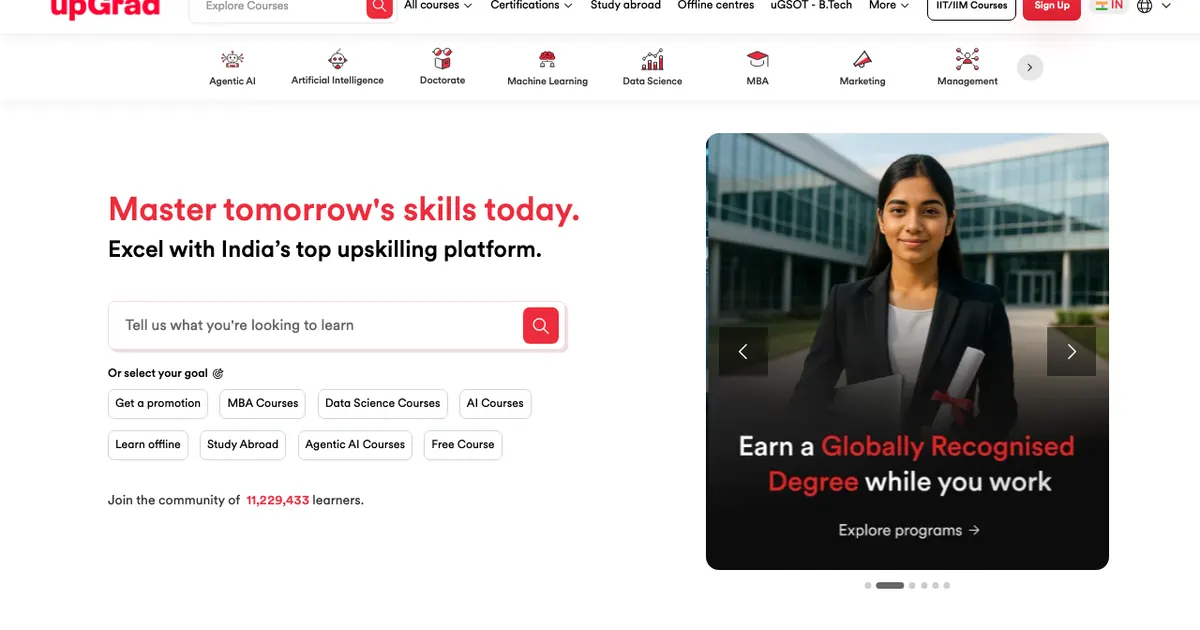
Carousel sliders are ubiquitous in the training vertical, with an 80 to 100 percent adoption rate across high-performing B2B sites. Use carousels to display client logos, showcase curriculum modules, or highlight testimonials. A carousel allows you to pack dense social proof into a compact space without overwhelming the visitor. Ensure the carousel auto-advances but includes clear navigation arrows for manual control.
Trainer Biographies and Authority Signals
Coaching is a high-trust purchase. Include professional headshots, certifications (ICF, ATD), and specific methodologies used. Do not hide your trainers behind a generic "Our Team" page. Put their faces and credentials directly on the program landing pages.
Outcome-Driven Case Studies
Instead of writing vague statements about "improving leadership," detail the exact problem, the intervention, and the metric. For example: "Reduced mid-level manager turnover by 18 percent over six months through a targeted feedback coaching program."
WhatsApp Click-to-Chat
For Indian operations, a floating WhatsApp button is critical. B2B norms indicate 60 to 100 percent of Indian B2B sites use this for quick queries. It reduces friction for mobile users who want to ask a quick question before committing to a full RFQ form.
Comparison Table for Program Tiers
L&D managers compare options. Make it easy for them. Include a comparison table on your corporate training pages.
| Feature | Foundation Workshop | Advanced Team Training | Executive Cohort |
|---|---|---|---|
| Target Audience | Individual Contributors | Mid-Level Managers | C-Suite & VPs |
| Delivery Format | Half-Day Virtual | 2-Day In-Person | 6-Month Hybrid |
| Assessment Included | Basic Profile | 360-Degree Feedback | Psychometric Eval |
| Post-Program Support | Email Q&A (30 Days) | Monthly Group Calls | 1-on-1 Coaching |
| Pricing Model | Per Seat | Fixed Team Rate | Annual Retainer |
SEO+AEO (JSON-LD+llms.txt)
Search engine optimization for training companies is highly competitive. You are competing against large educational platforms and individual consultants. A visual page builder is not enough. You need structured data and AI optimization.
Implement Course and Organization Schema
Use JSON-LD to markup your programs. Specifically, implement Course schema for every program page. This structured data tells search engines exactly what your course is, who offers it, and how much it costs.
B2B norms show that FAQPage schema is rare, appearing in under 25 percent of all verticals. Do not waste your technical resources injecting FAQPage schema. Instead, focus on Organization and Course schema to appear in rich snippets for queries like "corporate communication training."
Write an llms.txt File
Large language models are becoming primary research tools for HR managers. An llms.txt file provides a curated summary of your training programs, methodologies, and pricing models in a format optimized for AI crawlers.
This ensures that when an L&D manager asks an AI tool for recommendations on "leadership training providers in Bangalore" or "executive coaches in New York," your company is accurately represented. Standard robots.txt files block crawlers. The llms.txt file invites them to understand your specific B2B offerings.
Intent-Driven Content Architecture
Focus on long-tail, intent-driven keywords. "Leadership training" is too broad. "Virtual leadership training for remote engineering teams" is a keyword that converts. Structure your H2 and H3 tags to answer these specific queries directly.
Mistakes
Many coaching and training websites fail to generate leads because of avoidable design and structural errors.
Focusing on Philosophy Over Curriculum
Coaches love to talk about their personal philosophy. Buyers want to know what happens during the sessions. Outline the exact modules, exercises, and deliverables. If you run a three-day workshop, list the agenda for each day.
Hiding Pricing Information
While you cannot list exact prices for custom corporate training, you should provide starting rates or ranges for open-enrollment workshops and individual coaching. B2B buyers abandon sites that force them to call for basic pricing information. Provide a "Starting at" price to anchor expectations.
Ignoring Mobile Friction
In India, a significant portion of B2B research happens on mobile devices. If your RFQ form has fifteen required fields and no WhatsApp alternative, you will lose mobile traffic. Limit forms to four essential fields: Name, Company, Work Email, and Team Size.
Using Generic Stock Photography
Training companies need to show real work. Use photos of actual workshops, virtual session screenshots, and real facilitators. Stock photos of generic boardrooms and forced handshakes kill credibility. Buyers want to see your training environment.
Neglecting Post-Training Resources
Your site should not just sell the program. It should sell your ongoing expertise. Include a resource section with assessment templates, leadership frameworks, and whitepapers. This builds authority and captures leads further up the funnel.
FAQ
How long should a training company website take to build? A focused B2B website for a training provider should take four to six weeks. This allows time to write program-specific copy, shoot or source authentic imagery, and configure lead routing.
Do I need separate sites for India and the US? Not necessarily. You can use a single site with geo-routing. If a visitor from India lands on the site, they should see WhatsApp integration and INR pricing. US visitors should see calendar booking and USD pricing.
What is the best way to handle corporate training inquiries? Use a multi-step RFQ form. Ask for team size, current challenges, and timeline on step one. Ask for contact details on step two. This reduces form abandonment and qualifies the lead before they even submit.
Should I include a blog on my coaching website? Only if you plan to update it monthly. A stale blog hurts credibility. If you cannot commit to regular content, focus on building a library of evergreen resources like downloadable guides or assessment tools.
***
About Plact
Plact (plact.work) is a B2B website builder designed for service businesses that sell high-consideration programs. We build platforms for training companies, coaching firms, and consultants who need to convert enterprise buyers. We focus on structured data, clean information architecture, and high-conversion components. We do not use bloated templates or generic stock layouts. We build sites that pass technical SEO audits and route qualified leads directly to your sales team.
Rebuild Your Training Website
If your current website is not generating qualified corporate inquiries, it is time to rebuild.
Send us your current website URL and the primary cities you serve (for example, Mumbai and Austin). We will review your existing site against B2B design norms and training vertical benchmarks. We will send you a detailed rebuild plan outlining the required taxonomy, components, and technical fixes.
This plan includes a fixed price quote for the complete rebuild on Plact. No discovery calls required to get the numbers.
Send your URL and cities to hello@plact.work to get started.
Send us your current URL and the cities you target. We reply within one business day with a page-by-page rebuild plan and a fixed price. No sales call required.
Related guides