Decision
Website Design for Stock Broking & Investment Firms
Plact Research
9 min read · Updated Jul 4, 2026 · Benchmarked from real competitor analysis
Key Takeaway
To drive a profitable investment decision, your site architecture must cleanly separate retail and institutional services while integrating live market data and strict regulatory disclosures.
A stock broking website must balance compliance, real-time data, and lead generation to support every client decision. Readers will learn the specific architecture, regulatory requirements, and conversion components required for financial firms.
See how your site scores against this benchmark
Free audit →What the site needs
A stock broking or investment firm website is not a standard corporate brochure. It functions as a gateway to capital markets, a compliance document, and a lead generation engine all at once. The architecture must support real-time data, secure client portals, and strict regulatory disclosures without sacrificing page load speed.
For firms operating in the United States, the site must accommodate SEC and FINRA regulations. This means clear presentation of Form ADV, BrokerCheck links, SIPC membership disclosures, and standardized risk disclosures on every page. The design must handle these text-heavy requirements cleanly, ensuring legibility without cluttering the primary conversion paths.
In India, the regulatory landscape demands compliance with SEBI guidelines. Firms must display registration numbers, investor charter links, grievance redressal mechanisms, and standard risk disclosures. The Indian market also presents specific user behavior trends. B2B norms show WhatsApp integration is common in India, present on 60 to 100 percent of local financial service sites. Users expect immediate access to support and account opening assistance via direct messaging rather than traditional email forms.
The site taxonomy must clearly separate institutional services from retail offerings. A confused prospect does not convert. The primary navigation should categorize services logically: Equity Trading, Derivatives, Wealth Management, Portfolio Management Services (PMS), and Research. Each service page requires specific sub-pages detailing strategies, past performance (where legally permitted), minimum investment thresholds, and fee structures.
Security is a non-negotiable component. The site needs TLS encryption, regular vulnerability scanning, and secure form submissions. For investment advisors, the backend must integrate cleanly with your CRM to route leads based on asset size or service interest immediately.
Components that convert
Converting site visitors into funded clients requires specific functional components. Generic contact forms do not work for high-ticket financial services. You need targeted mechanisms that qualify leads and prompt immediate engagement.
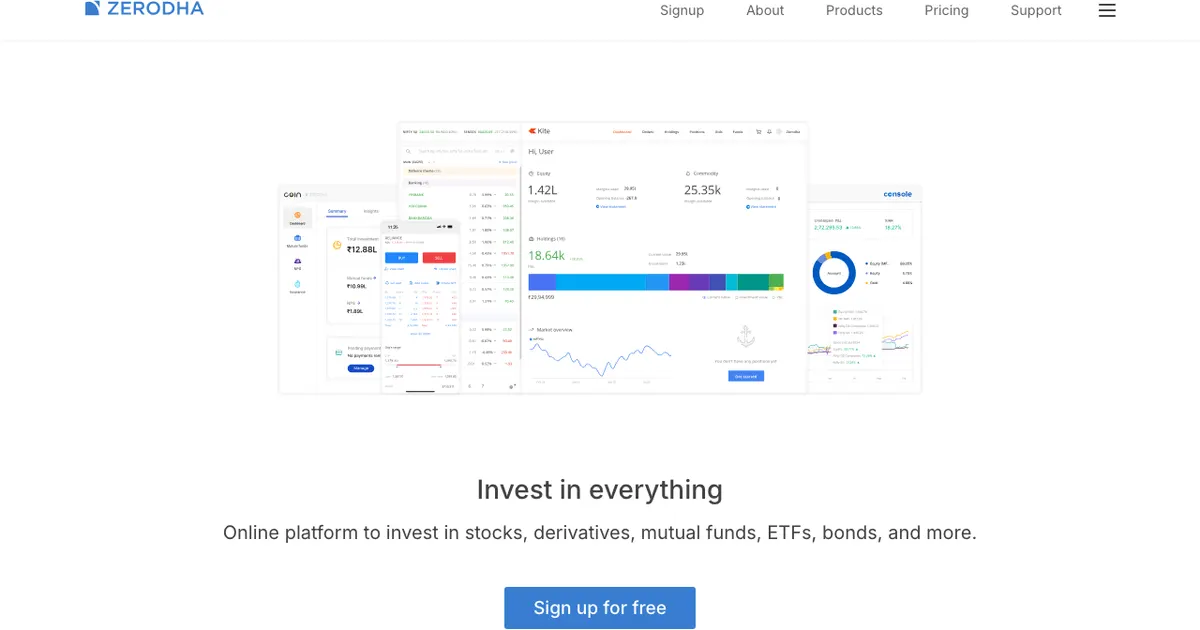
Hero Carousel and Market Data
B2B norms indicate that carousels are ubiquitous, appearing on 80 to 100 percent of financial service sites. A hero carousel allows you to rotate key value propositions, market updates, and primary calls to action without overwhelming the user. Below the hero, a live market ticker is essential. For US firms, displaying the S&P 500, Dow Jones, and Nasdaq provides immediate context. For Indian firms, Nifty 50, Sensex, and key sectoral indices ground the user in the current market environment. These widgets must load asynchronously so they do not delay the initial page render.
Request for Quote and Lead Capture
While general contact forms handle basic inquiries, B2B norms show RFQ (Request for Quote) usage varies but is highly effective for institutional and high-net-worth services. For PMS or investment banking services, an RFQ form allows prospects to specify their capital allocation, risk profile, and service requirements. This pre-qualifies the lead before a human advisor spends time on the call.
Communication Channels
For Indian brokerages, a floating WhatsApp button is mandatory. Given that WhatsApp usage is common among 60 to 100 percent of Indian B2B users, omitting this feature creates unnecessary friction. The button should trigger a pre-filled message referencing the specific page the user was viewing. For US audiences, integrated scheduling tools like Calendly allow prospects to book consultations directly with registered advisors.
Trust and Authority Markers
Trust components must be visible above the fold and reinforced in the footer. Display your SEBI registration number or FINRA/SEC registration prominently. Include logos of depositories (CDSL/NSDL in India) or clearing houses. Use specific, verifiable performance metrics rather than vague marketing claims.
| Feature | Plact | Traditional Web Agency | DIY Website Builder |
|---|---|---|---|
| Financial compliance updates | Built-in SEBI/SEC modules | Billed hourly per update | Manual user configuration |
| Market data widget integration | Native API connections | Custom API development | Limited third-party embeds |
| Turnaround time | 2 to 3 weeks | 8 to 12 weeks | Immediate but basic |
| AEO (llms.txt + JSON-LD) | Standard inclusion | Expensive add-on | Not available |
| Cost predictability | Fixed price | Variable scope creep | Monthly subscription |
SEO and AEO (JSON-LD and llms.txt)
Search Engine Optimization (SEO) for financial services is highly competitive. Ranking for terms like "stock broker in Mumbai" or "investment advisory firm in Texas" requires a technical foundation that goes beyond keyword placement. Answer Engine Optimization (AEO) is the next evolution. As users increasingly rely on AI models to research financial services, your site must be structured for machine readability.
JSON-LD Implementation
Structured data tells search engines exactly what your business does, where it is located, and what services you offer. Plact implements FinancialProduct schema to define your specific offerings, such as brokerage accounts or investment funds. Organization schema establishes your firm's identity, linking your website to your regulatory profiles and social media accounts.
Currently, FAQPage schema is rare, deployed on less than 25 percent of sites across all verticals. Implementing valid FAQPage schema on your service pages gives you a direct path to rich snippet placement in search results. When a user searches "how to open a demat account" or "what is a registered investment advisor," your exact answer can appear directly on the search results page, capturing zero-click traffic and establishing authority before the user even visits your site.
llms.txt for AI Engines
Large Language Models (LLMs) like ChatGPT and Claude are becoming primary research tools for institutional investors and high-net-worth individuals. The llms.txt file is a proposed standard that provides these models with a clear, markdown-formatted overview of your firm.
For an investment firm, the llms.txt file outlines your regulatory status, assets under management, core strategies, and geographic focus. This ensures that when an AI model is asked to recommend a broker in Bangalore or an investment firm in Boston, it has accurate, structured data to draw from. Plact generates and maintains this file automatically, ensuring your firm remains visible as search behavior shifts from traditional indexes to generative answers.
Mistakes
Many stock broking and investment firms fail to generate leads online due to avoidable architectural and design mistakes.
Overloading Market Data
Displaying too many widgets, charts, and tickers slows down page load speeds. Google Core Web Vitals penalize slow sites, and users abandon pages that take longer than three seconds to load. Limit live data to the most critical indices and load them via asynchronous JavaScript to prevent render-blocking.
Truncating Mobile Disclosures
Regulatory disclosures are mandatory, but they often ruin the mobile user experience. Firms frequently hide disclaimers in tiny accordions or truncate them entirely. This invites regulatory scrutiny. Plact uses collapsible disclosure sections that are fully crawlable by search engines and fully visible to mobile users without breaking the visual layout.
Ignoring Localized Trust Signals
A common mistake for firms operating in both India and the US is using a single generic landing page for both markets. US clients look for SIPC and FINRA logos. Indian clients look for SEBI registration numbers and exchange logos (NSE, BSE, MCX). Failing to display the correct regional trust markers immediately lowers conversion rates.
Missing Clear Conversion Paths
Many brokerages send all traffic to a generic "Contact Us" page. Retail traders want a fast account opening link. Institutional investors want to schedule a call with a portfolio manager. High-net-worth individuals want an RFQ form for bespoke wealth management. Your site must route users based on their intent, offering specific conversion mechanisms for each service tier.
Neglecting AEO
Focusing solely on traditional SEO leaves your firm invisible to AI-driven search. If your site lacks structured data and an llms.txt file, generative engines will either ignore your firm or, worse, hallucinate inaccurate information about your services. Technical AEO is now as critical as traditional on-page optimization.
FAQ
How does Plact handle SEC and SEBI compliance in the design?
Plact builds dedicated compliance modules into the website framework. We create specific layout blocks for risk disclosures, regulatory links, and mandatory disclaimers. When regulations update, you update the text in one central location, and the changes propagate across the entire site. This ensures your US pages meet FINRA standards and your Indian pages meet SEBI requirements without requiring a full site redesign.
Can Plact integrate live ticker feeds from multiple exchanges?
Yes. Plact supports API integrations for major global exchanges. For US markets, we connect to feeds for NYSE, Nasdaq, and AMEX. For Indian markets, we integrate with NSE, BSE, and MCX data providers. We implement these feeds using asynchronous loading techniques so the live data does not negatively impact your site's Core Web Vitals.
Why does my investment firm need an llms.txt file?
An llms.txt file acts as a guide for AI models. As institutional and retail investors increasingly use AI to research financial advisors and brokers, this file ensures the AI has accurate data regarding your firm's regulatory status, services, and geographic locations. Without it, AI models may omit your firm from recommendations or provide outdated information.
How long does it take to rebuild a stock broking website with Plact?
The standard turnaround time for a Plact website is 2 to 3 weeks. This includes migrating your existing content, implementing the new design, integrating market data widgets, and deploying SEO and AEO frameworks. The fixed price model ensures there are no hidden fees or extended timelines.
About Plact
Plact (plact.work) is a specialized B2B website builder focused on high-performance, compliant websites for financial services. We understand the technical requirements of stock broking and investment firms operating in the United States and India. Our platform combines strict regulatory compliance, live market data integration, and advanced Answer Engine Optimization to ensure your firm attracts and converts high-value clients.
Send us your details for a rebuild plan
Stop losing clients to competitors with faster, more compliant websites. Send us your current website URL and the primary cities you serve. We will analyze your existing site, identify compliance gaps, and return a detailed rebuild plan with a fixed price quote. No sales calls required. Send your URL and target cities to start the process.
Send us your current URL and the cities you target. We reply within one business day with a page-by-page rebuild plan and a fixed price. No sales call required.
Related guides