Decision
Website Design for Software & SaaS Companies
Plact Research
7 min read · Updated Jul 4, 2026 · Benchmarked from real competitor analysis
Key Takeaway
To drive a final decision, a software platform must combine a functional hero visual with clear product taxonomy, visible pricing, and prominent compliance badges.
Software buyers make fast choices, so your site must support their decision at every step. Discover how to structure pages, from initial text to trust signals, to convert visitors.
See how your site scores against this benchmark
Free audit →Communicate Your Exact Value Proposition Instantly
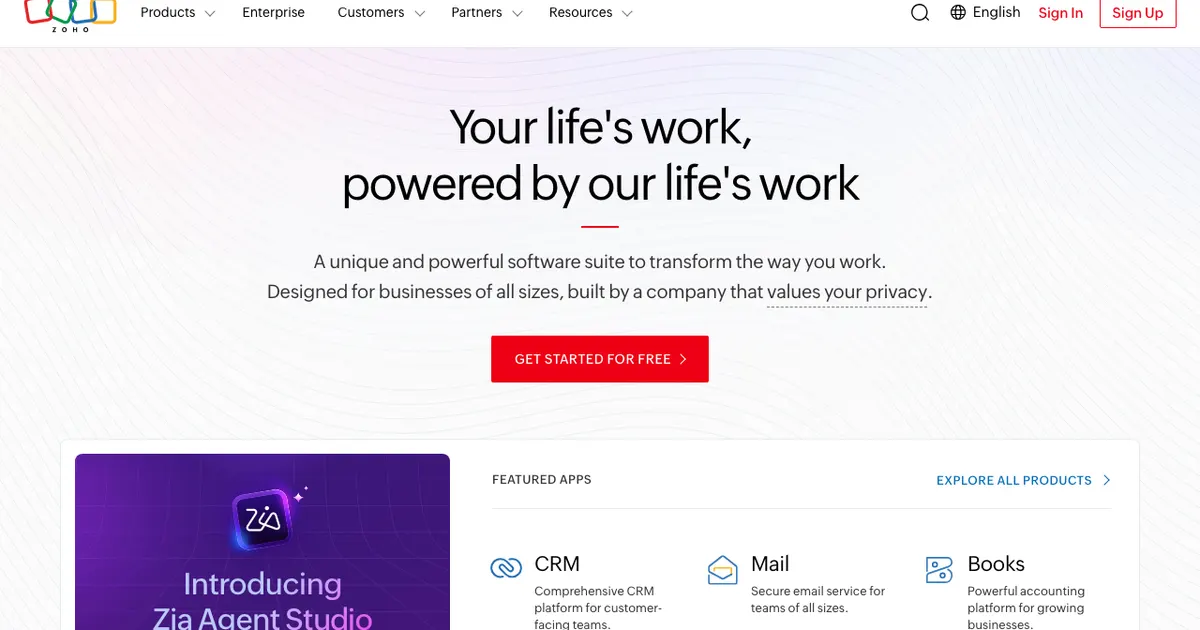
The hero section of a SaaS website has one job: communicate the exact value proposition in under five seconds. Software buyers are impatient. If they cannot understand what your platform does, who it is for, and what the primary benefit is within the first viewport, they will leave.
A high-converting SaaS hero contains four elements. First, a clear headline focused on the outcome, not the technology. Second, a subheadline specifying the target audience. Third, a primary call to action for high-intent users, typically "Start Free Trial" or "Book a Demo". Fourth, a secondary call to action for researchers, such as "View Pricing" or "Watch Product Tour".
Visuals in the hero must be functional. A generic stock photo of a laptop will not convert a CTO. Use a high-quality screenshot of the dashboard, a short looping video of the interface, or an interactive product tour. The visual must prove the software is mature and usable.
What the site needs
A SaaS website requires a strict page taxonomy that addresses the distinct needs of technical evaluators, business buyers, and procurement. B2B norms dictate that software sites must segment information clearly.
Product and Features Pages Do not build a single "Features" page. Build a parent "Product" page that branches into specific feature or module pages. Each feature page must focus on a specific use case. For example, instead of a page titled "Analytics", build a page titled "Real-time Revenue Analytics for Finance Teams". This structure supports organic search and provides direct links for sales teams to send prospects.
Pricing US SaaS buyers expect transparent, tiered pricing. Hiding pricing behind a "Contact Us" wall increases bounce rates and frustrates buyers. If you offer an enterprise tier with custom pricing, list the variables that affect the price (seats, data volume, API calls) next to the RFQ button. Indian enterprise buyers often require custom quotes due to tax structures and local procurement policies, so providing both a transparent starting price and an RFQ option is critical.
Integrations and API Documentation Software does not exist in a vacuum. Technical buyers need to know how your tool fits their existing stack. A dedicated integrations page, complete with logos and brief descriptions, is mandatory. For developer-focused SaaS, link directly to API documentation from the main navigation.
Security and Compliance Enterprise procurement in the US and India will not buy software without security validation. Dedicate a section of the site to compliance badges. Display SOC 2 Type II, ISO 27001, GDPR, and DPDP Act compliance clearly. Provide a data processing agreement (DPA) available for download.
Communication Channels B2B norms vary significantly between the US and India regarding lead capture. In India, WhatsApp adoption for B2B queries sits between 60 and 100 percent across verticals. Indian buyers expect immediate responses and prefer chatting on WhatsApp over filling out long forms. Your site needs a visible WhatsApp click-to-chat widget.
In the US, buyers expect professional scheduling. RFQ usage varies, but standard B2B practice relies on Calendly integrations for demo scheduling. Your contact forms must be short. Ask for name, work email, and company size. Do not ask for phone numbers on US-facing forms unless absolutely necessary, as it reduces conversion rates.
Components that convert
Once the taxonomy is set, the individual components on the page must drive action. SaaS buyers look for specific signals of product maturity.
Hero Carousels Data shows that carousels are ubiquitous, appearing on 80 to 100 percent of high-performing B2B sites. In the SaaS vertical, carousels are effective when used to rotate client logos, key metrics, or short feature highlights. Do not use carousels for core value propositions. The first slide should always contain the primary message. Use carousels lower on the page to provide social proof.
Interactive Product Demos Static screenshots are no longer sufficient. Embed interactive demos using tools like Arcade or Navattic. Let the user click through three or four core workflows. This self-serve evaluation filters out unqualified leads and warms up qualified leads before they speak to sales.
Social Proof and Case Studies Generic testimonials do not work. Use case studies that highlight specific metrics. Instead of "This software is great", use "Plact helped us reduce API response time by 40 percent". Include the client's industry and size.
Pricing Tables Use a three-tier pricing table. Highlight the middle tier as the most popular. Clearly list the differences between tiers. Use checkmarks for included features and dashes for excluded features.
Here is a comparison of B2B norms for SaaS buyers in the US and India:
| Feature | US SaaS Buyers | India SaaS Buyers |
|---|---|---|
| Primary Contact Method | Calendly / RFQ forms | WhatsApp (60-100% adoption) |
| Pricing Expectation | Transparent, self-serve tiers | Tiered, but RFQ for enterprise |
| Social Proof | Fortune 500 / Mid-market logos | Local enterprise / GCC logos |
| Content Focus | ROI, integrations, compliance | Feature depth, support, cost |
| Procurement Blockers | SOC 2, GDPR | DPDP Act, local data residency |
Developer Resources If your SaaS targets developers, include code snippets directly on the marketing pages. Show a simple API request and the JSON response. This technical proof accelerates adoption.
SEO and AEO (JSON-LD + llms.txt)
Software companies compete in highly saturated search markets. Standard SEO is not enough. You must optimize for Answer Engine Optimization (AEO) to ensure AI models and search engines understand your product context.
JSON-LD Schema Implement structured data using JSON-LD. While FAQPage schema is rare across all verticals (used in under 25 percent of cases), SaaS sites must implement specific schema types. Use SoftwareApplication schema to define your product, operating system, and application category. Include AggregateRating if you have verified reviews. Use Organization schema to establish brand entity relationships.
Implement Product schema for your pricing tiers. This allows search engines to display pricing directly in rich snippets. Ensure your BreadcrumbList schema is active on all pages to help search engines understand your site hierarchy.
llms.txt Large Language Models (LLMs) read your website to answer user queries. An llms.txt file in your root directory provides a markdown summary of your product, API, and pricing. This file acts as a direct instruction set for AI search engines like Perplexity and ChatGPT.
Without an llms.txt file, LLMs may hallucinate features or misrepresent your pricing based on outdated forum posts. The file must include a concise product summary, a link to your API documentation, and a clear explanation of your pricing model. Plact generates and manages this file for every SaaS site we build.
Page Speed and Core Web Vitals Technical buyers judge your website's performance as a proxy for your software's performance. If your marketing site takes four seconds to load, they will assume your application is slow. Optimize for a Largest Contentful Paint (LCP) under 2.5 seconds. Use static site generation where possible. Minimize JavaScript execution on the client side.
Mistakes
Many software companies build websites that fail to convert due to avoidable errors.
Feature Dumping Listing every single feature on the homepage overwhelms buyers. The homepage should communicate value. Feature lists belong on dedicated product pages. Group features by the problem they solve, not by their technical name.
Ignoring Mobile B2B researchers use mobile devices. If your pricing table requires horizontal scrolling on a phone, or if your interactive demo breaks on mobile, you lose leads. Design mobile-first. Ensure all forms and CTAs are easily tappable.
Vague CTAs "Learn More" is a weak call to action. Use action-oriented CTAs like "Start Free Trial", "Calculate Your ROI", or "Book a Technical Demo". The CTA must match the buyer's intent on that specific page.
Overusing Animations Sliding text, parallax scrolling, and heavy animations distract from the message. They also destroy page speed. Use motion sparingly to draw attention to primary CTAs or to illustrate a product workflow.
Missing WhatsApp for India If you target the Indian market and lack a WhatsApp integration, you are ignoring B2B norms. Indian buyers expect to ask a quick question on WhatsApp before committing to a demo. The absence of this channel creates friction.
Hiding Documentation Developers and technical evaluators will look for your documentation before they talk to sales. Hiding docs behind a login wall kills developer adoption. Make your API docs public and searchable.
FAQ
How does website design differ for US and Indian SaaS buyers? US buyers prefer self-serve pricing models, transparent feature lists, and scheduled demos via tools like Calendly. Indian buyers rely heavily on WhatsApp for immediate communication, expect detailed feature breakdowns, and often require custom RFQ processes for enterprise procurement.
Why is FAQPage schema not recommended for SaaS sites? FAQPage schema is rare, used in under 25 percent of all verticals. Search engines have devalued FAQ rich results over time. SaaS sites gain more SEO value from SoftwareApplication and Product schema, which directly highlight features, pricing, and ratings.
What is llms.txt and why does my SaaS site need it? llms.txt is a markdown file placed in your website's root directory. It provides AI models with a clear, structured summary of your software, API, and pricing. This ensures AI search engines accurately represent your product instead of hallucinating information from third-party sources.
Should I use a carousel on my SaaS homepage? Carousels are ubiquitous in B2B web design, appearing on 80 to 100 percent of high-performing sites. Use them to rotate client logos or key metrics. Do not use them for primary value propositions, as users often skip past the first slide quickly.
***
About Plact
Plact (plact.work) is a B2B website builder focused on high-performance, conversion-driven design. We build websites for software and SaaS companies that need to rank well, load fast, and convert technical buyers in the US and India. We implement strict page taxonomies, JSON-LD schema, and llms.txt files to ensure your product is understood by both humans and AI models.
Rebuild Plan
Send your current website URL and your target cities to Plact. We will analyze your existing taxonomy, speed, and conversion paths. We will return a detailed rebuild plan and a fixed price for the project.
Send us your current URL and the cities you target. We reply within one business day with a page-by-page rebuild plan and a fixed price. No sales call required.
Related guides