Decision
Website Design for Insurance Companies
Plact Research
6 min read · Updated Jul 4, 2026 · Benchmarked from real competitor analysis
Key Takeaway
To accelerate the purchasing decision, an insurance platform must combine clear industry verticals, regional legal disclosures, and concise quote request flows.
This article explains how to build an insurance website that supports the B2B buyer decision. You will learn to structure hero sections, carrier partnerships, and quoting engines for commercial coverage.
See how your site scores against this benchmark
Free audit →Communicating Coverage Scope and Next Action
The hero section of an insurance website must communicate three things immediately: the specific coverage offered, the geographic scope, and the next action. Generic stock photos of umbrellas or handshakes fail here.
For B2B insurance, the hero headline must target the exact buyer. If you sell cyber liability to mid-market tech firms, say that. If you sell marine cargo insurance to Indian export businesses, state it clearly.
The hero needs a primary call to action. According to B2B norms, an RFQ (Request for Quote) button is standard but varies by vertical. For commercial insurance, placing a "Get a Quote" or "Request Proposal" button in the top right and center of the hero is expected. The user must know they are on a page where they can initiate a business transaction, not just read a blog post.
What the site needs
An insurance website is not a digital brochure. It is a quoting engine, a compliance document, and a lead generation funnel. The site taxonomy must reflect how buyers search for and purchase coverage.
Core Taxonomy Structure
- Industry Verticals: Group coverage by business type. Examples include "Manufacturing Insurance," "IT Services Liability," and "Logistics Coverage." Buyers rarely search for generic business insurance. They search for their specific industry risks.
- Coverage Types: Segment by product. "Directors and Officers," "Professional Indemnity," "Group Mediclaim," and "Commercial Auto" belong here.
- Claims Process: A dedicated section outlining exactly how to file a claim. This builds trust and reduces operational load on your call centers.
- Carrier Partnerships: If you are a broker or aggregator, list the underwriters. If you are a direct carrier, detail your financial strength ratings.
Regional Compliance and Trust
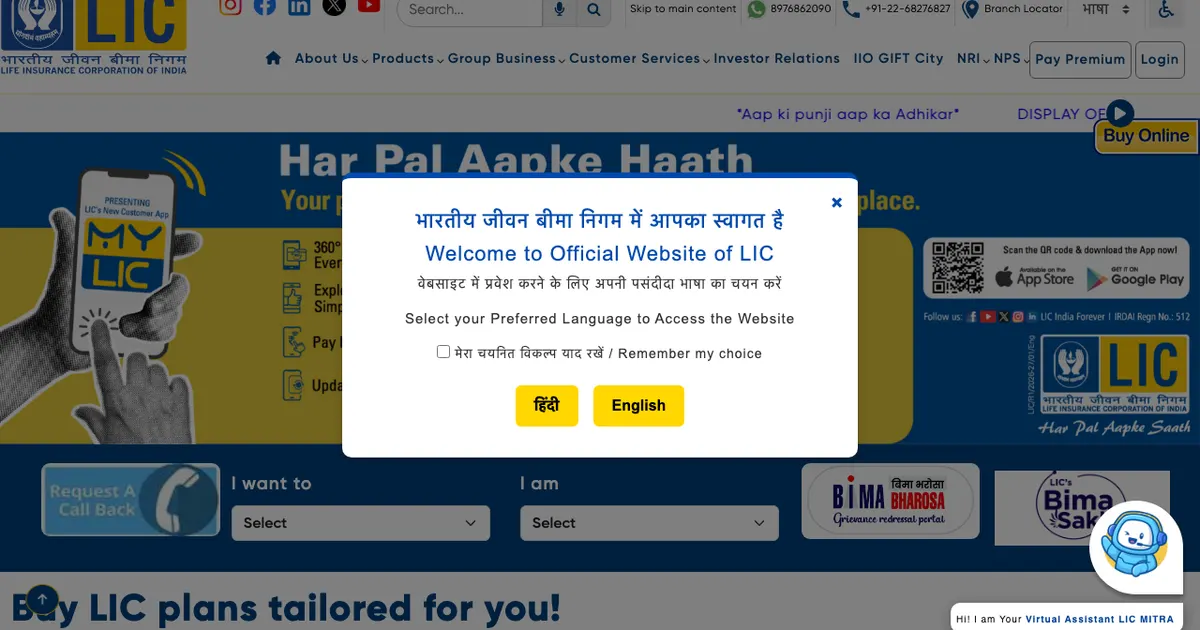
The site must address regional requirements. In the US, this means state-specific licensing disclosures and HIPAA compliance language if capturing health data. In India, IRDAI (Insurance Regulatory and Development Authority of India) guidelines dictate strict disclosures regarding commission structures and policy wording.
Your website needs a visible legal footer. This footer must link to privacy policies, terms of use, and grievance redressal mechanisms. For Indian users, an IRDAI registration number must be visible. For US users, NAIC numbers and state domicile information are required. Missing these details flags your site as non-compliant to corporate buyers.
Components that convert
B2B insurance buyers want to understand coverage limits, exclusions, and premiums quickly. The site components must facilitate this evaluation without requiring a phone call.
Quote Forms and RFQ Flows
B2B norms show that RFQ usage varies heavily by industry. In commercial insurance, an RFQ form is critical. However, asking for too much information upfront kills conversion. A standard B2B RFQ form for insurance should ask for:
- Company name
- Industry type
- Employee count or revenue size
- Specific coverage requested
- Work email and phone number
Do not ask for physical addresses or detailed claims history in the initial web form. Move that to the follow-up email or broker call.
WhatsApp Integration
According to norms, WhatsApp is ubiquitous in India, with 60 to 100 percent of B2B sites utilizing it for lead capture. Indian buyers expect a WhatsApp button to ask quick questions about policy terms or claim status. Plact integrates direct WhatsApp APIs into your site, routing messages to specific agents based on the page the user visited.
In the US, WhatsApp is less common. US buyers prefer live chat or scheduled Zoom consultations. Plact configures regional chat routing, showing WhatsApp buttons to Indian IP addresses and live chat to US visitors.
Carousels for Policy Highlights
norms indicate that carousels are ubiquitous, appearing on 80 to 100 percent of successful B2B sites. In insurance, carousels effectively display policy highlights without cluttering the page.
Use carousels for:
- Coverage comparisons (Basic vs Premium plans)
- Key benefits of a specific policy
- Step-by-step claims process
- Testimonials from other corporate clients
Keep carousel auto-rotation slow or require manual swiping. Auto-rotating carousels too quickly frustrates users trying to read complex policy exclusions.
Comparison Table
Corporate buyers compare policies. Give them the tools to do it on your site. Below is a standard comparison table structure Plact implements for insurance clients.
| Feature | Standard Commercial General Liability | Premium Umbrella Policy | Cyber Liability Rider |
|---|---|---|---|
| Bodily Injury Limit | $1,000,000 | $5,000,000 | Not Covered |
| Property Damage Limit | $1,000,000 | $5,000,000 | Not Covered |
| Data Breach Coverage | Not Covered | Not Covered | $2,000,000 |
| Deductible | $2,500 | $10,000 | $5,000 |
| RFQ Turnaround | 24 Hours | 48 Hours | 72 Hours |
SEO and AEO (JSON-LD and llms.txt)
Insurance is a high-competition keyword market. Ranking for "best health insurance for small business" or "commercial vehicle insurance India" requires strict technical SEO. Furthermore, Answer Engine Optimization (AEO) is critical as users increasingly ask ChatGPT or Google AI Overviews for insurance recommendations.
JSON-LD Implementation
norms state that FAQPage schema is rare, appearing in less than 25 percent of all verticals. Insurance sites often overuse FAQ schema, leading to spam classifications. Instead of FAQ schema, Plact implements specific B2B schemas:
- FinancialProduct Schema: Use this to mark up specific insurance policies. Include the
annualPercentageRateorfeesAndCommissionsSpecificationwhere applicable. - InsuranceAgency Schema: Mark up your physical offices. Include
areaServedto specify the geographic regions you underwrite in. - Service Schema: Use this for broker services like "Risk Assessment" or "Claims Consulting."
Proper JSON-LD helps search engines understand the exact financial products you offer, making it easier for AI engines to cite your site when answering policy questions.
llms.txt for AI Discovery
The llms.txt file is a new standard for guiding large language models. For an insurance site, your llms.txt file should list your most authoritative policy pages, coverage glossaries, and claims process documentation.
When a user asks an AI, "What does professional indemnity cover for an IT consultant in Bangalore?", the AI uses your llms.txt file to find your specific coverage page. Plact generates and optimizes this file, ensuring your policy definitions are the ones AI models train on and cite. This establishes your site as the canonical source for insurance definitions in your niche.
Mistakes
Insurance companies make consistent, costly mistakes on their websites. These errors directly impact lead generation and policy sales.
Hiding the Claims Process
Many insurers treat the claims process as an afterthought. They bury it three clicks deep in the navigation. Buyers want to know how hard it is to file a claim before they buy the policy. Make the claims process a top-level navigation item. Detail the exact steps, required documents, and average turnaround time.
Jargon-Heavy Copy
Insurance copy is full of terms like "subrogation," "indemnity," and "coinsurance." While corporate risk managers understand these, small business owners do not. Write policy descriptions in plain English. Define terms inline. Plact builds glossary pages that automatically link complex terms in your copy to simple definitions, improving both user experience and SEO.
Slow Quoting Engines
Third-party quoting widgets are notoriously slow. If a user clicks "Get a Quote" and waits ten seconds for an iframe to load, they will leave. Plact builds native, lightweight quote forms that load instantly. If the actual underwriting calculation takes time, capture the lead's email first, then send the quote to their inbox. Never make a user stare at a loading spinner.
Ignoring Mobile B2B Users
There is a false assumption that B2B buyers only use desktops. In India, a massive portion of B2B research happens on mobile devices. If your policy documents are PDFs that require horizontal scrolling on a phone, you lose the buyer. Plact formats all policy documents in responsive HTML.
Missing Local Trust Signals
A US buyer wants to see state licensing. An Indian buyer wants to see IRDAI registration and local corporate office addresses. A generic "Contact Us" page fails to build trust. Include local phone numbers, physical addresses, and regulatory license numbers on every footer.
FAQ
What is the ideal length for an insurance RFQ form? The ideal RFQ form has five to seven fields. Ask for company name, industry, contact info, and coverage type. Avoid asking for detailed claims history or physical mailing addresses on the first interaction. Move that data collection to the follow-up email.
Should we use FAQ schema on our insurance pages? norms indicate FAQPage schema is rare, used in less than 25 percent of verticals. Google has devalued FAQ rich results for many sites. Instead of FAQ schema, use FinancialProduct and Service schema to define your actual insurance products. Write FAQs as plain text HTML to answer user questions without risking schema spam penalties.
How does Plact handle regional differences for India and the US? Plact uses IP routing to display region-specific content. Indian visitors see WhatsApp chat options, IRDAI compliance text, and Rupee pricing. US visitors see live chat, NAIC numbers, and USD pricing. The underlying CMS manages both regions from a single dashboard.
Why do we need an llms.txt file for an insurance site? AI models like ChatGPT and Perplexity are becoming primary search tools for corporate risk managers. An llms.txt file directs these models to your most important policy definition pages. This increases the probability that AI engines will cite your site as the source when answering complex insurance questions.
About Plact
Plact (plact.work) is a B2B website builder designed for high-consideration, compliance-heavy industries. We build fast, secure websites for insurance companies, brokers, and underwriters. Our platform handles regional compliance, multi-language support, and complex RFQ routing without relying on bloated third-party plugins. We focus on technical SEO, AEO readiness, and conversion-driven design.
Send your URL and cities
If your current insurance website is slow, non-compliant, or failing to convert B2B traffic, Plact will fix it.
Send us your current website URL and the primary cities or regions you serve (e.g., Mumbai, Bangalore, Chicago, New York). We will analyze your existing site architecture, quote flow, and technical SEO. In return, you will receive a complete rebuild plan and a fixed price quote to execute the project on the Plact platform.
Contact Plact today to start your rebuild.
Send us your current URL and the cities you target. We reply within one business day with a page-by-page rebuild plan and a fixed price. No sales call required.
Related guides