Decision
Website Design for Catering Companies
Plact Research
8 min read · Updated Jul 3, 2026 · Benchmarked from real competitor analysis
Key Takeaway
The most critical build decision for a catering platform is replacing static PDFs with backend-updated menus and adding event-specific RFQ forms to capture qualified leads.
Learn how to structure your catering site to serve both corporate planners and private parties. Make an informed architecture decision by implementing real-time menu pages, dedicated service verticals, and high-speed image carousels that convert traffic into booked events.
See how your site scores against this benchmark
Free audit →What the site needs
A catering website serves two distinct audiences. The first is the corporate event planner looking for reliable bulk orders. The second is the individual planning a wedding or private party. Your site must cater to both without confusing either.
B2B norms dictate specific communication preferences. In India, WhatsApp is the primary communication channel for B2B inquiries, with usage rates between 60% and 100% across the hospitality sector. Planners want to send a quick message and receive a fast quote. In the United States, email and structured RFQ (Request for Quote) forms remain standard, though WhatsApp is gaining traction for event coordination.
The site taxonomy must reflect your actual service verticals. A standard catering menu page is insufficient. You need dedicated pages for Corporate Catering, Wedding Catering, Private Events, and Drop-off Catering. Each page must address the specific concerns of that audience. Corporate clients care about punctuality, dietary restrictions, and invoicing. Wedding clients care about customization, tasting sessions, and presentation.
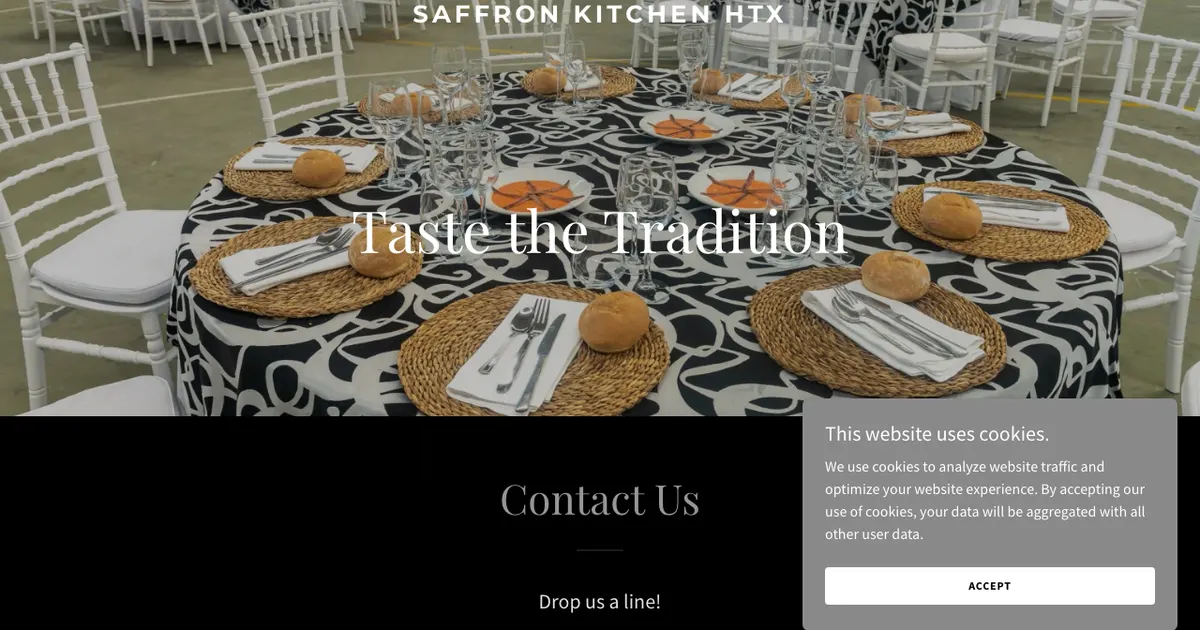
Visual proof is mandatory. B2B design norms show that image carousels are ubiquitous in the catering and hospitality vertical, appearing on 80% to 100% of high-performing sites. Planners want to see live action buffet setups, plated dishes, and event decor. A site without a visual portfolio will not convert.
Components that convert
To turn traffic into booked events, your site needs functional components built specifically for food service. Plact integrates these directly into your build.
Dynamic menu displays
Stop using PDF menus. PDFs are impossible to read on mobile devices, hurt your search engine rankings, and are tedious to update. Plact builds dynamic menu pages. You can categorize items by event type, dietary preference (vegan, Jain, gluten-free), or price tier. When you change a price or add a new dish, you update one field in the backend.
Event-specific RFQ builders
RFQ usage varies by region and event size, but it is the highest converting lead magnet for caterers. A standard contact form generates unqualified leads. A Plact RFQ form asks for event date, guest count, service style (drop-off, full service, staffed buffet), and cuisine preference. This filters out low-quality inquiries and gives your sales team the exact data needed to send an accurate quote.
WhatsApp integration
For the Indian market, a floating WhatsApp button is non-negotiable. Plact configures the click-to-chat link to pre-fill a message. When a user clicks the button, their WhatsApp opens with a message like "Hi, I need a quote for 100 guests on [Date]." This reduces friction and captures the lead instantly on their preferred platform.
High-speed image carousels
Because carousels are standard practice, Plact optimizes them for speed. We enforce strict image compression and lazy loading. A carousel of your best wedding setups loads instantly, even on a 3G connection in a rural area. We build carousels that support swipe gestures on mobile and arrow navigation on desktop.
Comparison table: Generic builders vs Plact
| Feature | Generic Website Builder | Plact Catering System |
|---|---|---|
| Menu management | Static PDF or image uploads | Dynamic database with filtering |
| Lead capture | Generic contact form | Event-specific RFQ builder |
| Mobile communication | Basic phone links | Pre-filled WhatsApp integration |
| Image galleries | Heavy sliders slowing page load | Lazy-loaded WebP carousels |
| SEO structure | Generic page hierarchy | Catering taxonomy (Corporate, Wedding) |
SEO and AEO (JSON-LD and llms.txt)
Search engine optimization for caterers is highly local. You do not need nationwide traffic. You need traffic from your specific cities and surrounding suburbs. Plact structures your site for local search dominance.
Local SEO architecture
We build location pages for every city you service. If you operate in Mumbai and Pune, we build distinct pages for "Corporate Catering Mumbai" and "Wedding Catering Pune." These pages include localized schema markup, driving directions, and specific venue partnerships.
JSON-LD implementation
Search engines read structured data to understand your business. Plact implements CateringService schema on your service pages. This markup tells Google exactly what you do, your price range, and your service area.
We also implement FAQPage schema on your frequently asked questions section. B2B data shows that FAQPage schema is rare, appearing on less than 25% of websites across all verticals. Implementing it gives you a direct path to rich snippets in search results, taking up more real estate on the search page and answering user questions before they click a competitor.
AEO and llms.txt
Answer Engine Optimization (AEO) is the process of making your site readable for AI models like ChatGPT and Perplexity. Plact generates an llms.txt file for your website. This file acts as a guide for AI crawlers, pointing them to your most important menu pages, pricing structures, and service areas. When a user asks an AI for a corporate caterer in your city, the AI can read your llms.txt file and recommend your business with accurate information.
Mistakes
Caterers make predictable mistakes online. Plact corrects them during the rebuild process.
Hiding pricing information
Many caterers refuse to list starting prices. They fear competitors will undercut them or clients will experience sticker shock. The reality is the opposite. Hiding prices wastes your time. A corporate planner with a budget of $15 per head will not book a caterer starting at $40 per head. Plact recommends listing "starting from" prices for standard packages. This pre-qualifies your leads.
Using stock food photography
Stock photos of generic buffets are obvious and damage trust. Users want to see your actual food. If you do not have professional photos, Plact advises using high-quality smartphone photos of real events over polished stock imagery. Authenticity converts better in food service.
Ignoring mobile navigation
Over 70% of your traffic comes from mobile devices. A common mistake is building a desktop site with a complex dropdown menu that becomes unusable on a phone. Plact builds mobile-first navigation. We use sticky headers, collapsible menu structures, and prominent call-to-action buttons sized for thumbs.
Missing dietary filters
In both India and the US, dietary restrictions are a primary concern. A corporate planner managing a team with vegan, halal, and nut-free requirements will leave your site if they cannot quickly verify your capabilities. Plact builds dedicated dietary filter pages.
FAQ
How does Plact handle menu updates?
Plact uses a headless content management system. You log into a simple dashboard, type the new dish name, adjust the price, and hit publish. The change reflects instantly across your desktop site, mobile site, and any integrated digital menus. No developer intervention is required.
Can I manage multiple city locations from one dashboard?
Yes. Plact supports multi-location operations. You can manage menus, pricing, and RFQ submissions for Mumbai, Delhi, and Bangalore from a single admin panel. You can assign specific staff members to receive RFQ notifications based on the city selected by the user.
Do you integrate with existing CRM systems?
Plact connects directly with standard CRM platforms like HubSpot and Zoho. When a user submits an RFQ, their data automatically populates in your CRM. If you do not use a CRM, Plact sends the RFQ data directly to your email and WhatsApp.
Why do I need an llms.txt file?
AI search engines are changing how users find local services. An llms.txt file provides a plain-text summary of your services, pricing, and location data that AI models can ingest easily. Without it, AI models might hallucinate details about your business or ignore you entirely in favor of a competitor who provides structured machine-readable data.
Is the WhatsApp integration necessary for US caterers?
While email remains dominant in the US, WhatsApp is heavily used by wedding planners and corporate event coordinators who manage multiple vendors on the go. Adding a WhatsApp button provides a frictionless alternative to phone tag. Plact includes it as an optional toggle for US clients and a default feature for Indian clients.
About Plact
Plact (plact.work) is a B2B website builder focused on functional design and lead generation. We build websites that serve as operational tools, not just digital brochures. We understand the specific needs of catering companies in India and the US, from WhatsApp integration to dynamic menu management. We prioritize speed, local search visibility, and structured lead capture.
Next steps
Stop losing event bookings to competitors with faster, clearer websites. Send us your current website URL and the list of cities you service. We will review your existing structure, identify gaps in your lead capture process, and return a comprehensive rebuild plan. This plan includes a fixed price quote for the entire project. No hourly billing, no hidden fees. Send your URL and cities to start the process.
Send us your current URL and the cities you target. We reply within one business day with a page-by-page rebuild plan and a fixed price. No sales call required.
Related guides